
Estate
Quiet Mountainside, Open Sky
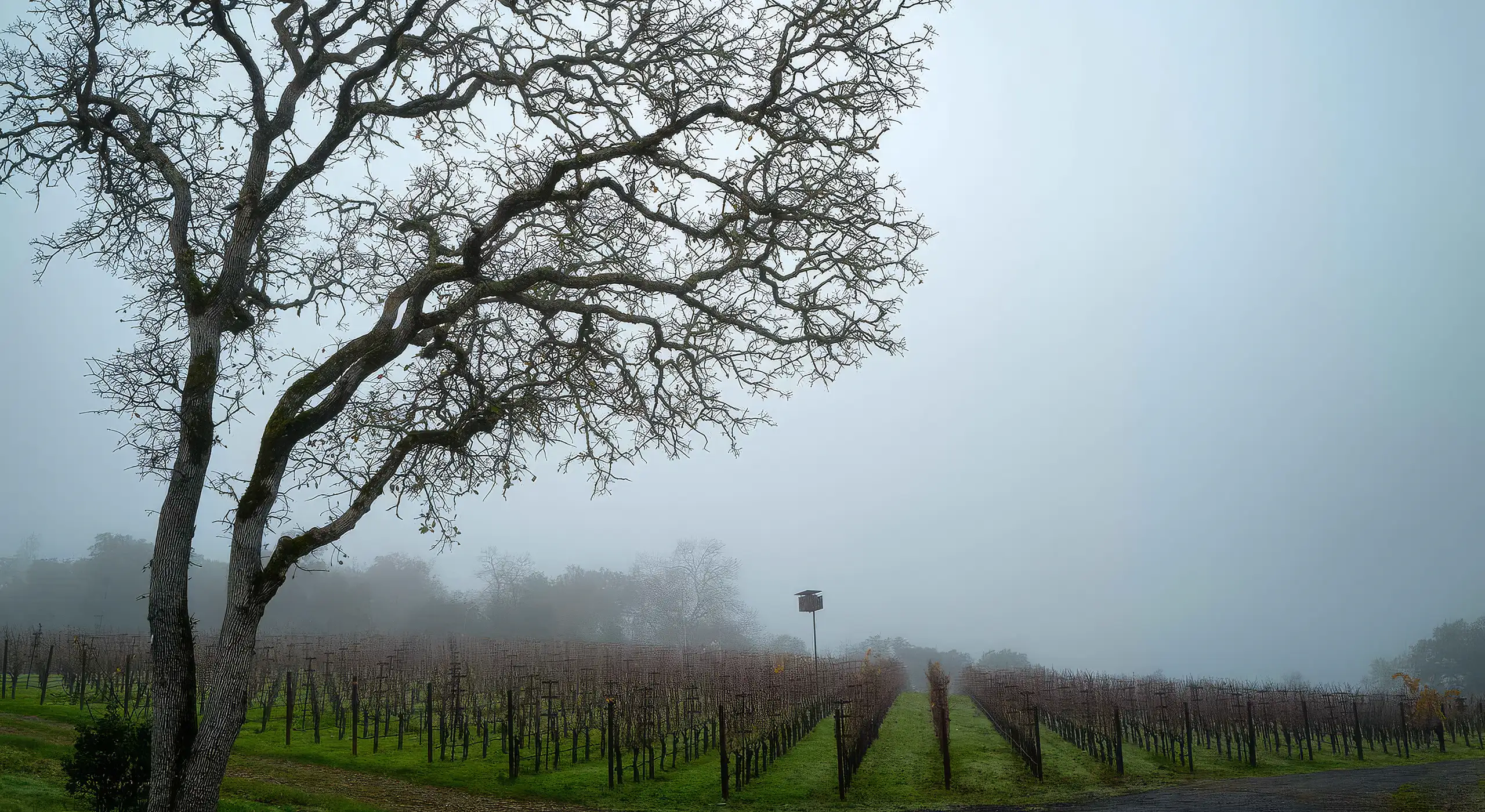
This piece of Spring Mountain, at Napa Valley’s narrowest point, had never been planted when we found it. Today, our vines grow on a sunny slope, surrounded by forest. With underground springs and plenty of birdsong, Fe sits above the St. Helena bench, remote but still part of Napa Valley.
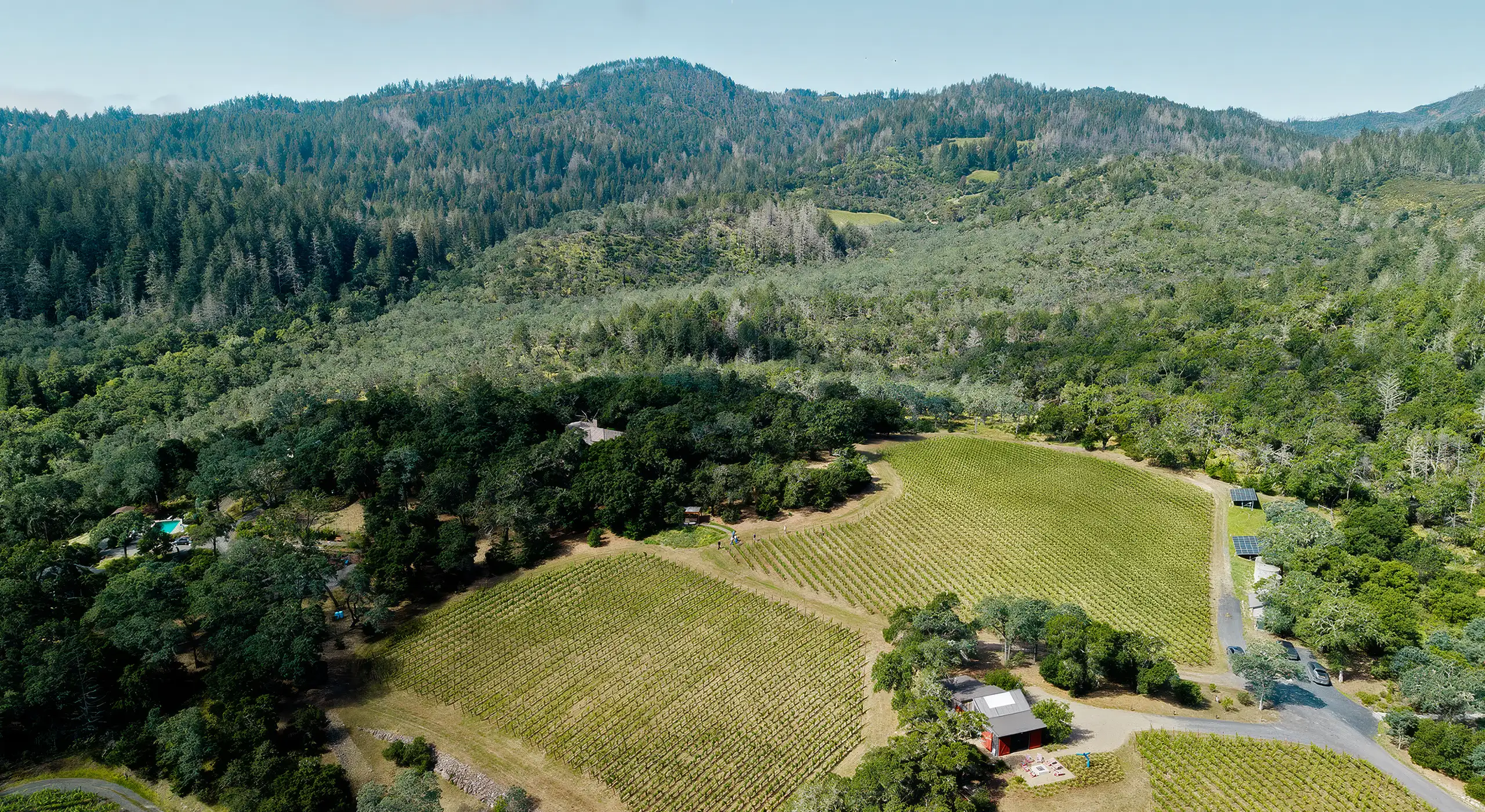
Our Terroir
Fire, Fog, and Iron
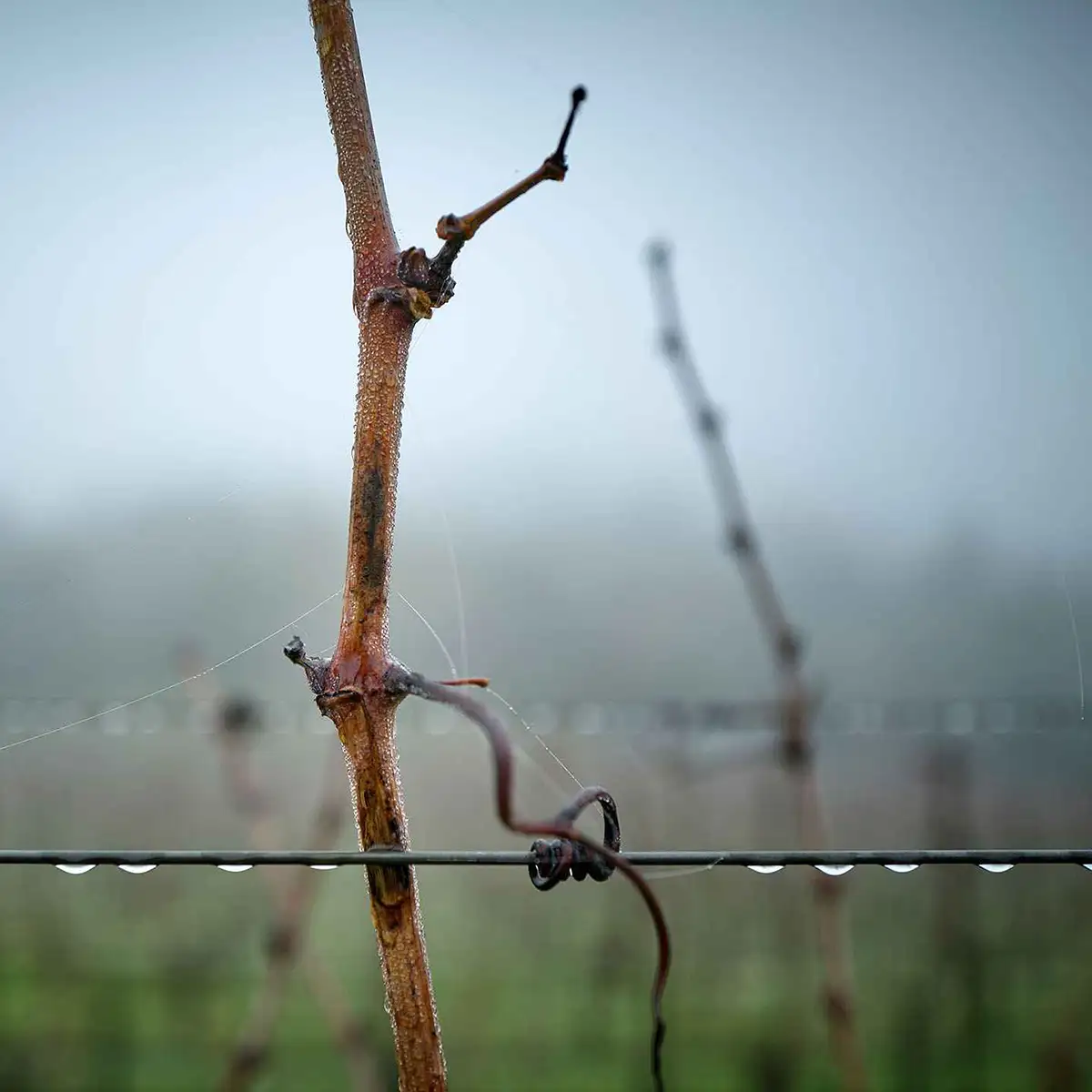
Our iron-rich Aiken soil, volcanic in origin, gives our wines their structure and depth. The surface is rocky and well-drained, but sublayers of loam and clay hold on to moisture. Much of the valley is known for its warmth, yet our microclimate stays temperate, thanks to our east-facing aspect, morning fogs, and cane pruning that creates a canopy of cool shade through the summer heat.
Our Vineyard
Planted Deliberately,
Grown Naturally
We tend each block of densely planted vines according to its own microclimate, and all of our farming is CCOF-certified. The vineyard’s composition mirrors the proportions we aim for in our final blends: four acres of Cabernet Sauvignon, and a single acre shared among Malbec, Cabernet Franc, and Petit Verdot.
The Landscape
A Living Ecosystem
Fe is a small corner of a big, rich landscape, surrounded by nearly 2,000 acres of parkland. Oak, pine, coast redwood, Douglas fir, madrone, manzanita, and wild grasses flank the property, and it’s home to owls, woodpeckers, butterflies, foxes, and bobcats. We do our part to support that diversity by planting cover crops, composting, and tending our flower and vegetable gardens.
It’s in the perfect location.